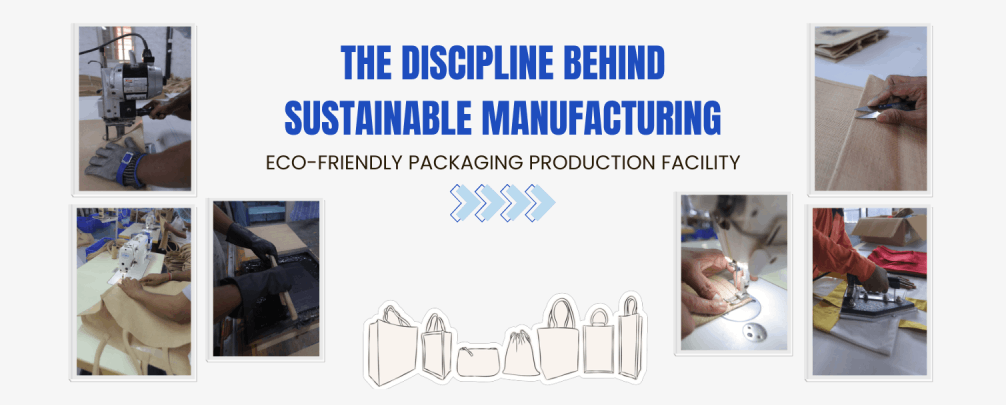
The Discipline Behind Sustainable Manufacturing
Featuring sustainable solutions by Kelvin Ecopack
Introduction
Sustainable manufacturing is usually proposed as an idea or a thought. In reality, it is a discipline. It is built on consistency, repeatable processes and decisions that hold up not just for one order but for thousands. Sourcing eco-friendly bags at a high-scale matters only when it happens in a sustainable manner. It is based on reliability, on quality, timelines and responsibility.
At Kelvin Ecopack, sustainability is not treated as a marketing feature. It is approached as an operational standard that runs through materials, people and production systems.
Sustainability Begins Before Production
True sustainability starts long before a bag is stitched or printed. It begins with material choices and procurement discipline. Natural fabrics like Jute, Juco, Cotton and Canvas are renewable by nature, but their environmental value depends on how efficiently they are used.
Studies show that 10–15% of production losses in the packaging and textile industries can be caused by material waste if cutting and planning are not optimum. Manufacturers who are disciplined plan their design and make sure that there is no wastage and re-use leftovers whenever it is possible. In addition to having a smaller environmental impact, reduced waste benefits consumers by improving cost control and consistency. Not only does this benefit consumers by reducing wastage but this also lessens the environmental impact
Process Control Is the Backbone of Responsibility
Sustainable manufacturing is not possible without process control. When production is inconsistent, waste increases, rejections rise and timelines slip. According to global manufacturing benchmarks, process inefficiencies can increase carbon and resource impact by up to 20% per unit produced.
This is why disciplined production environments focus on repeatability. Defined workflows, quality checkpoints and trained teams ensure that every batch meets the same standard. For wholesale buyers, this matters because sustainability without reliability is a risk—not a solution.
People Are Central to Long-Term Sustainability
A factory’s output reflects how its workforce is treated. Ethical employment practices are not just a moral responsibility; they are operationally smart. The International Labour Organization reports that stable, fairly managed work environments improve productivity by 15–25% over time.
When workers are trained, retained, and respected, the result is lower error rates, better craftsmanship and fewer production disruptions. This stability is what allows manufacturers to commit to long-term partnerships rather than transactional supply.
Durability Is an Environmental Metric
One of the most overlooked facts about sustainable products is that durability is a sustainability metric. A reusable bag that lasts five years replaces dozens—sometimes hundreds—of single-use alternatives.
Industry data shows that a well-made reusable fabric bag offsets its environmental footprint after just 2–3 years of regular use, compared to disposable packaging. This makes disciplined construction, strong stitching and material integrity essential—not optional.
For buyers, this translates into fewer complaints, stronger brand perception and products that genuinely deliver on sustainability claims.
Scaling Sustainably Requires Structure
Eco-friendly products can be produced in small quantities by many different companies. Very few can do it regularly at scale. Planning, handling capacity and disciplined sourcing are crucial for ethical scaling.
Over 60% of supply chain sustainability problems globally happen during fast scale-up, when systems become strained without a foundation. Growth is carefully planned by disciplined manufacturers, who make sure that volume increases meet environmental goals, labour standards or quality.
Sustainability Is Proven Over Time
The most credible sustainability claims are not made loudly—they are proven quietly over years of consistent delivery. Buyers today are more informed than ever. Greenwashing is quickly exposed, while disciplined manufacturing earns trust order by order.
For export buyers and brands looking for long-term partners, sustainability is no longer about slogans. It is about systems that work, people who are valued and products that perform exactly as promised.
That is the discipline behind sustainable manufacturing—and it is what turns responsible intent into real-world impact.
FAQs:
1. What is sustainable manufacturing and why does it matter for e-commerce businesses?
Ans: Sustainable manufacturing focuses on making products responsibly, without unnecessary waste or short product life. For e-commerce brands, this means fewer returns, stronger customer trust and packaging that performs well at scale.
2. How can retail brands implement sustainable manufacturing practices in their supply chain?
Ans: It starts with choosing suppliers who have consistent processes, transparent sourcing and reusable product designs. Long-term partnerships matter more than one-time sustainable claims.
3. What are the cost benefits of sustainable manufacturing for corporate gifting programs?
Ans: Durable, reusable products reduce repeat purchases and minimize last-minute replacements. Over time, this lowers total spend while improving brand recall and perceived value.
4. How do government agencies verify sustainable manufacturing standards for procurement projects?
Ans: Most agencies rely on documented processes, supplier audits and compliance with labour and environmental guidelines. Consistency and traceability are key factors in approval.
5. What sustainable manufacturing certifications should organic grocery brands look for in packaging suppliers?
Ans: While certifications help, reusability and material integrity matter most. Brands should prioritize suppliers who demonstrate long-term durability and responsible production practices.